Exacta Part Wheel Calculator: Cutting Costs by Selecting Second-Place Contenders
 Available in US
A full exacta wheel covers every possible runner in the non-key position. That sounds thorough until you see the price tag on a 14-runner handicap – 13 combinations at a pound a pop, and you are paying for several horses you would never back in a straight forecast. The part wheel exists precisely for this situation: you keep your key horse locked in first, hand-pick the runners you think can fill second, and slash the ticket cost without losing the combinations that actually matter.
I have been structuring part exacta wheels for the better part of nine years, and the single biggest lesson is that restraint pays. Not every runner in a race deserves a place on your ticket. The art is in deciding which three, four or five horses genuinely contend for second – and that decision is where handicapping skill directly converts into cost savings.
Why Narrow the Field in an Exacta Wheel
Here is a number that should make you pause: the average Flat field in 2025 sat at 8.90 runners. A full exacta wheel on that field costs 7.90 combinations – call it 8 at a pound. That is manageable. But Premier Flat fixtures averaged 11.02 runners, and suddenly a full wheel costs 10 combinations. Step up to a big Saturday handicap with 16 runners and your full wheel ticket hits 15 pounds per unit stake.
Now consider how many of those 15 runners realistically finish second behind your key horse. In most handicaps, genuine contenders for the places number somewhere between three and six. The rest are longshots, exposed form horses, or runners whose profile does not suit the conditions. A part wheel targeting five second-place selections on that same 16-runner race costs just 5 pounds instead of 15. You have cut your outlay by two-thirds while retaining coverage of the runners your form study identified.
The cost reduction is not the only benefit. A smaller ticket means you can increase your unit stake without increasing total spend. Five combinations at 3 pounds per unit is still only 15 pounds – the same price as the full wheel at 1 pound – but your return on a winning combination triples. That is a leverage effect that part wheels give you over full wheels every time the field exceeds your genuine contenders.
Part Exacta Wheel Formula With Three Worked Examples
I keep a scrap of paper in my raceday wallet with exactly one formula written on it: combinations = k x s, where k is the number of key horses and s is the number of selections in the other leg. For a standard part exacta wheel with one key horse in first and a chosen subset in second, k = 1, and the formula reduces to just s – the number of second-place selections. Multiply by your unit stake and you have the ticket price. Nothing else to it.
Let me walk through three scenarios I have actually played this season.
Example 1: Kempton evening card, 8 runners. I keyed a horse in first and picked three runners for second. Combinations: 3. Cost at 1 pound: 3 pounds. A full wheel on this race would have cost 7 pounds, so the part wheel saved me 57% of the ticket price. The key horse won by two lengths, my second pick finished second, and the dividend paid 14.80 to a 1-pound unit.
Example 2: York, 12-runner handicap. One key in first, five selections for second. Combinations: 5. Cost at 2 pounds per unit: 10 pounds. A full wheel at the same unit stake would have been 22 pounds. My key horse finished first but the runner-up was a 33/1 shot I had not included – the part wheel missed. That is the risk you accept when you narrow the field, and it is the honest trade-off.
Example 3: Cheltenham Festival, 14-runner novice hurdle. One key in first, six selections for second. Combinations: 6. Cost at 1 pound: 6 pounds. Full wheel cost: 13 pounds. The saving was just over half. My key horse did not win, so neither structure would have paid – but the 7-pound difference stayed in my pocket for the next race. Over a full festival, those savings compound.
Notice the pattern: the more runners in the race, the greater the absolute saving from a part wheel, because the gap between s and (n-1) widens. In small fields of six or seven, the part wheel barely saves anything and you might as well go full coverage. In big fields, the part wheel is almost always the sharper play.
Cost Savings: Part Wheel vs Full Exacta Wheel
Last year I tracked every exacta wheel I placed across a four-month window – 47 bets in total. Twenty-three were full wheels, twenty-four were part wheels. The full wheels cost me an average of 9.40 pounds per race. The part wheels averaged 4.60 pounds. My strike rate on full wheels was 17%, on part wheels 12.5%. The part wheels hit less often, as you would expect, but the lower cost per bet meant my overall return on investment was higher on the part wheel set.
The key metric is not strike rate in isolation. It is return per pound wagered. A full wheel guarantees coverage of every runner in the non-key position, but that guarantee comes at a price that dilutes your effective edge. If your handicapping is good enough to identify the right three or four contenders, the part wheel lets you concentrate your money on the combinations that carry genuine probability.
Here is a quick comparison for a 10-runner race at 1 pound per unit. A full wheel covering all 9 non-key runners costs 9 pounds. A part wheel with 5 picks costs 5 pounds. A part wheel with just 3 picks costs 3 pounds.
The 3-pick part wheel costs a third of the full wheel. If one of those three runners finishes second behind your key horse, you collect the same dividend as the full wheel holder – there is no penalty for having fewer combinations on the ticket. The dividend is per winning unit, not per ticket.
Where the part wheel truly shines is at festival meetings and big handicaps where field sizes regularly exceed 12. A full exacta wheel on a 20-runner race is 19 combinations – 19 pounds at minimum unit. A part wheel with six picks is 6 pounds. Over a five-race card where you play every race, the cumulative saving is 65 pounds. That is another three or four part wheels you can fund from the difference, spreading your exposure across more races without increasing your session budget. For a broader look at how all wheel bet types and their cost formulas fit together, the main calculator guide covers exacta, trifecta and superfecta structures side by side.
Picking the Right Number of Selections
So how many runners should you include in the non-key leg? There is no universal answer, but after nine years of playing these bets I have landed on a rough guide that works for me. In fields of 8 or fewer, three to four selections. In fields of 9 to 12, four to five. In fields above 12, five to six maximum. Beyond six, the part wheel starts losing its cost advantage and you should consider whether a full wheel or a different bet type makes more sense.
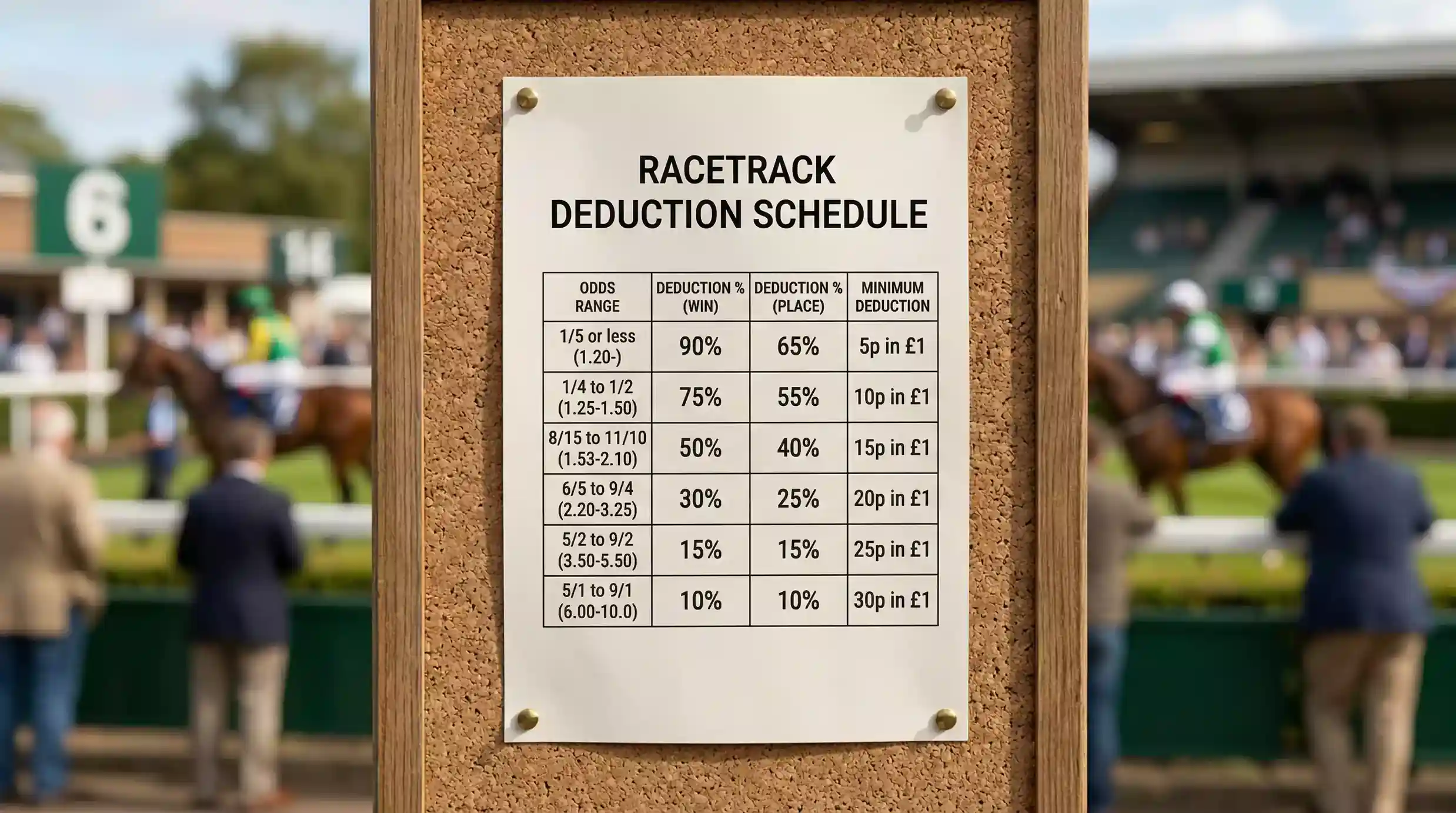
The Tote pools work the same way regardless of how many combinations you put on your ticket. The pool deduction on exacta – 25% – applies uniformly. Your share of the pool after deductions depends on how many winning units are in the pool, not on the size of your individual ticket. A part wheel with three combinations and a full wheel with nine combinations receive the same dividend per winning unit. The only difference is that you paid less to hold that winning unit.
That 25% deduction, incidentally, is one reason I prefer part wheels. Every pound you do not need to spend on combinations is a pound you keep in your pocket. The Tote takes its quarter from the pool regardless, so the less capital you expose, the less absolute deduction you absorb on losing bets.
Can I key a horse in second place instead of first in a part exacta wheel?
Yes. This is called a bottom wheel or back wheel. You fix your selection in second and pick the runners you want in first. The combination count and cost work identically – the formula is still k times s. The strategic reason to do this is when you rate a horse highly to place but doubt it will win outright.
How many runners should I include in the non-key leg for best value?
There is no fixed rule, but a practical guide based on field size works well. In fields of 8 or fewer, three to four selections keep costs tight without sacrificing too much coverage. In fields of 9 to 12, four to five is the range. Above 12 runners, five to six selections usually represent the best balance between ticket cost and realistic chance of capturing the second-place finisher.
Prepared by the Horse Racing Wheel bet Calculator editorial staff.