Cheapest Exotic Bet in Horse Racing: Cost Rankings From Quinella to Superfecta
 Available in US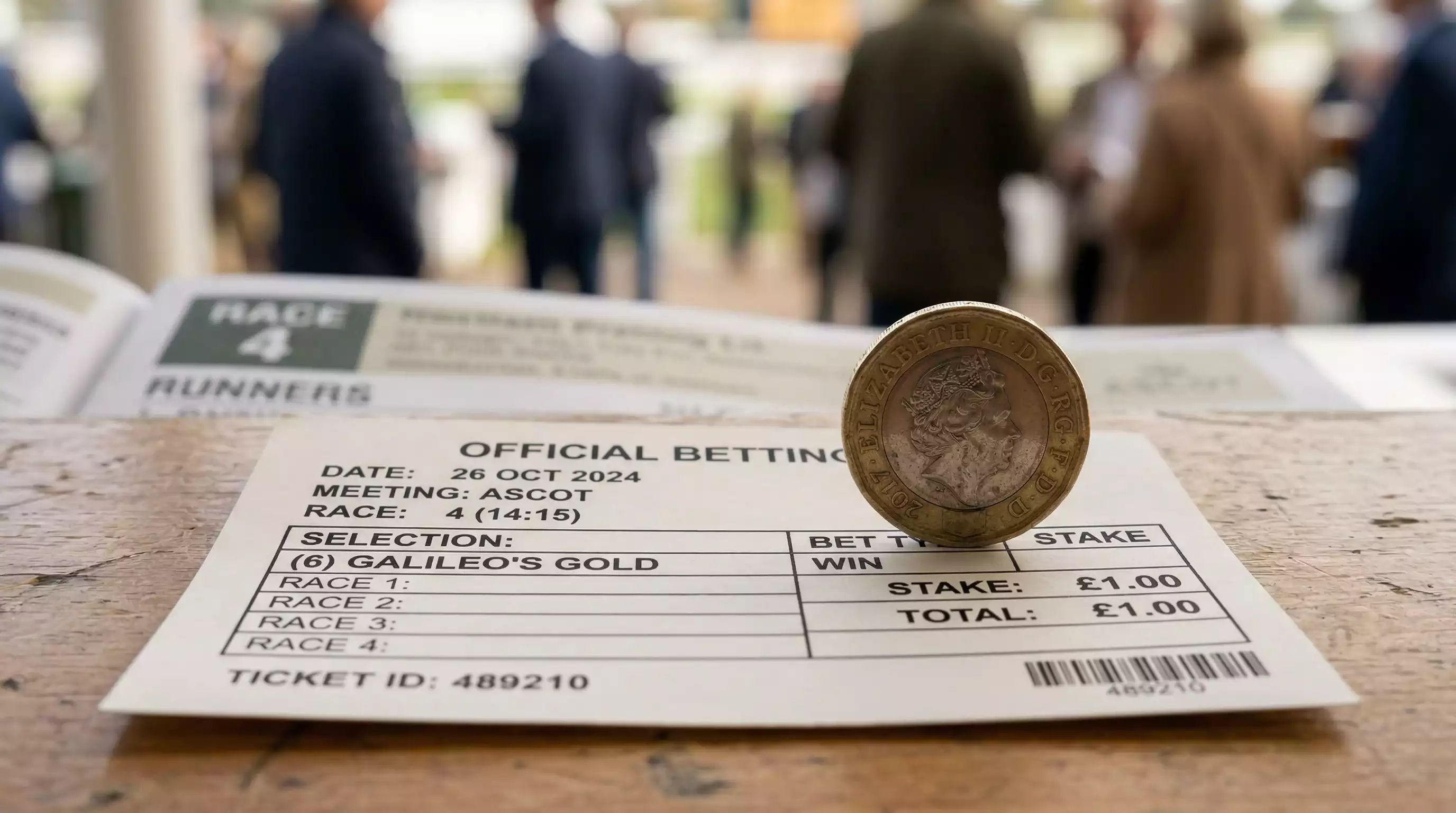
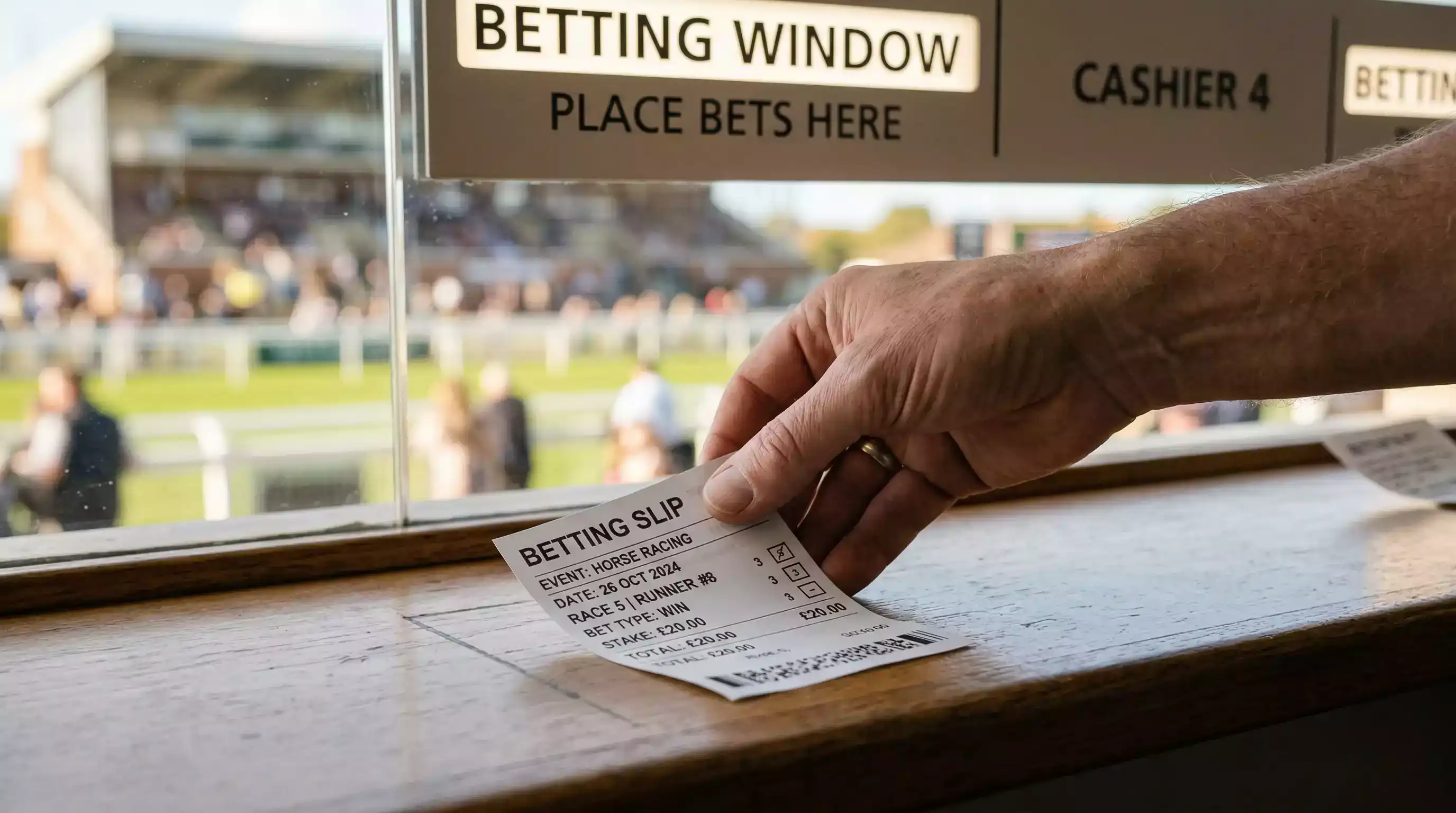
The first exotic bet I ever placed was a 1-pound straight forecast. One pound, two horses, one specific finishing order. It lost, but it cost me less than a pint. That was the moment I realised exotic bets do not have to be expensive – they only become expensive when you start stacking combinations without checking the price. The cheapest exotic bet in horse racing is exactly one unit on one combination, and from there the cost scales with complexity, coverage and ambition. Knowing where each bet type sits on the cost ladder lets you match your budget to the right structure.
Exotic Bet Cost Ranking: Lowest to Highest at Minimum Stake
At minimum unit stake, the ranking from cheapest to most expensive exotic bet is consistent across every field size. The Tote deductions across exotic pool types sit at 25%, with the range across all Tote pools running from 16% on Win bets to around 28% on the Jackpot. These deductions affect dividends, not ticket costs, so the ranking below is purely about what you hand over.
1. Straight Forecast / Straight Exacta. One combination, one unit. Cost: 1 pound. You name first and second in order. This is the cheapest possible exotic bet and the entry point for anyone exploring pool exotics.
2. Quinella / Swinger. One combination covering both finishing orders of two selected horses. Cost: 1 pound. Same price as a straight forecast but with broader coverage – either order pays.
3. Reverse Forecast (Combination Forecast on 2 horses). Two combinations covering both orders of two horses. Cost: 2 pounds. Mathematically identical coverage to a quinella, but placed as two separate exacta bets rather than one quinella bet. The dividend comes from the Exacta pool rather than the Swinger pool, which can produce different returns.
4. Straight Tricast / Straight Trifecta. One combination, one unit. Cost: 1 pound. You name first, second and third in exact order. Same price as a straight forecast but much harder to land – three positions instead of two.
5. Combination Forecast on 3 horses. Six permutations. Cost: 6 pounds. Covers every possible first-second pairing from three selections in both orders.
6. Combination Tricast on 3 horses. Six permutations. Cost: 6 pounds. Covers every possible ordering of three horses across first, second and third. Same permutation count as a three-horse combination forecast, but the bet type is different – you need all three positions correct.
7. One-key Exacta wheel (by field size). Cost = (n-1) per unit. On an 8-runner race: 7 pounds. On a 12-runner: 11 pounds. Scales linearly with field size.
8. One-key Trifecta wheel (by field size). Cost = (n-1) x (n-2) per unit. On an 8-runner race: 42 pounds. On a 12-runner: 110 pounds. Scales quadratically.
9. One-key Superfecta wheel (by field size). Cost = (n-1) x (n-2) x (n-3) per unit. On an 8-runner race: 210 pounds. The most expensive standard exotic structure.
The gradient is steep. From 1 pound for a straight forecast to 210 pounds for an 8-runner superfecta wheel, the cost spans two orders of magnitude. Knowing where your intended bet sits on this ladder before you place it prevents overspending.
Minimum Stakes: Tote, Coral, Betfred and William Hill
The UK Tote’s standard minimum unit is 1 pound across all exotic pool types. Some digital partners offer 50p units on selected pools, but 1 pound is the baseline you should budget against. The Tote’s 25% deduction on exotic pools applies identically regardless of your unit stake.
Major bookmakers offer forecasts and tricasts at similar minimum stakes, typically 1 pound per combination. The key difference is payout mechanism: bookmaker forecasts and tricasts pay at computer-calculated rates rather than Tote pool dividends. The minimum stake is similar, but the returns can differ significantly depending on the result and the calculation method.
Some platforms offer reduced minimum units for combination and wheel structures, bringing the per-combination cost below 1 pound. At 50p per combination, a one-key exacta wheel on a 10-runner race costs 4.50 instead of 9 pounds – a meaningful reduction for punters exploring exotics on a tight budget. The dividend per unit scales proportionally: a 50p unit pays half the declared dividend per unit.
Low Cost vs Low Difficulty: Why Cheap Exotics Still Challenge
A straight forecast costs 1 pound. Landing it requires correctly predicting first and second in order. The probability of a random selection hitting is approximately 1 in n x (n-1) – one in 72 for a 9-runner race. The cost is low, but the difficulty is high. That disconnect is the central tension in exotic betting.
Cheap does not mean easy, and expensive does not mean safe. A full trifecta wheel costs 56 pounds on a 9-runner race and covers every possible second and third behind your key horse. If your key horse wins, you are guaranteed a return – but that return might be a 30-pound dividend on a 56-pound ticket, which is a net loss of 26 pounds. You paid for certainty of coverage but the result was too predictable to generate a worthwhile dividend.
The skill in exotic betting is matching cost to expected value. A cheap straight forecast on a speculative combination that pays a large dividend if it hits is a high-variance, high-reward play. An expensive full wheel that guarantees a return but may not cover costs is a low-variance, potentially negative-value play. Neither is inherently better. The right choice depends on your assessment of the race, your risk tolerance, and your budget for the session.
Start cheap. Place straight forecasts and quinellas to learn how the pool system works. Progress to combination bets and part wheels as your understanding deepens. Arrive at full wheels and multi-key structures only when you have the handicapping skill to select key horses with genuine edge and the bankroll to absorb the ticket costs across a full meeting.
I spent my first full season placing nothing but straight forecasts and the occasional two-horse combination. The outlay was tiny – rarely more than 10 pounds per meeting on exotics – but I learned how dividends behaved, which pool sizes produced stable returns, and how field size influenced the gap between expected and actual payouts. That foundation made everything that followed more effective. Rushing straight to trifecta wheels without understanding the basics is like entering a marathon without completing a 5K first.
The cost ranking above is also a progression path – from the simplest, cheapest entry point to the most complex, most expensive structure. Walk it in order and you will build the foundation for profitable exotic play. For a detailed look at how every wheel type is priced and structured, the main wheel bet calculator guide covers formulas and tables for every scenario.
What is the cheapest exotic bet in horse racing?
The cheapest exotic bet is a straight forecast or straight quinella at minimum unit stake – 1 pound on most UK platforms. Both require just one combination. The straight forecast demands the correct finishing order of two horses; the quinella covers both orders for the same price.
Can I place a 10p unit exotic bet on the Tote?
The standard minimum unit on UK Tote exotic pools is 1 pound. Some digital Tote partners may offer reduced minimums on selected pool types, but 10p units are not widely available. The most common sub-pound option is 50p per unit, which halves the ticket cost and the per-unit dividend proportionally.
Published by the Horse Racing Wheel bet Calculator team.