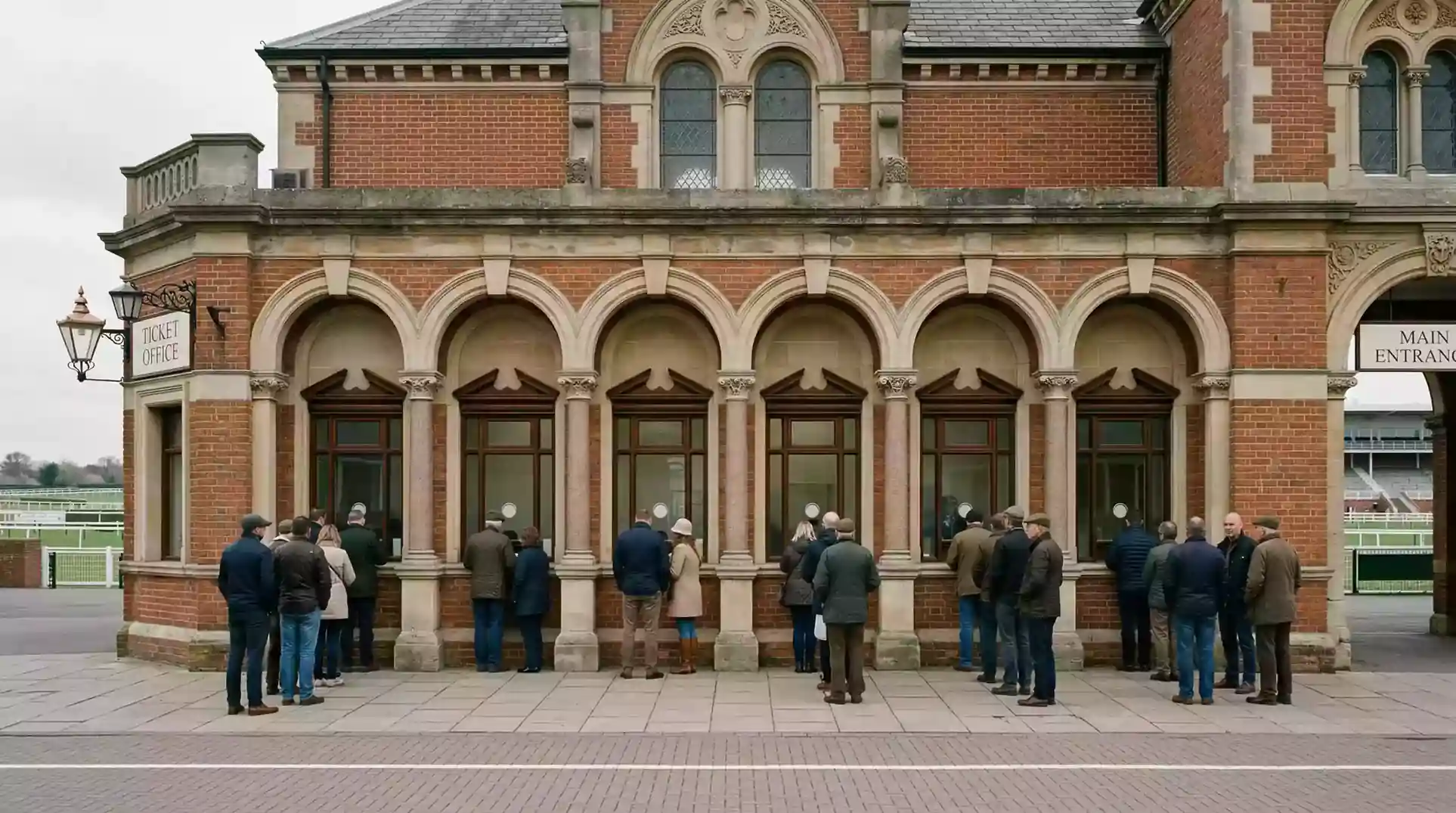
Flat vs National Hunt Wheel Bet Costs: How Discipline-Specific Field Sizes Shape Pricing
 Available in US
The first trifecta wheel I played over jumps cost 30 pounds. The first one I played on the Flat cost 72. Same structure, same unit stake, same key horse approach – but the field sizes told completely different stories. Flat racing averaged 8.90 runners in 2025. National Hunt averaged 7.84. That gap of just over one runner shifts trifecta wheel costs by roughly 25%, and the divergence widens the further you move along the exotic bet spectrum. If you treat Flat and Jump racing as interchangeable when budgeting for wheel bets, you are planning with the wrong numbers.
Flat Racing Field Sizes and Resulting Wheel Costs
The 2025 BHA Racing Report confirmed the average Flat field at 8.90 runners – a slight decline from 9.14 the previous year. Premier Flat fixtures bucked the trend, rising to 11.02 from 10.86. That split is crucial for wheel bettors: the races that attract the most betting interest and the deepest pools also carry the highest combination counts.
At 9 runners, a one-key trifecta wheel produces 56 combinations. At 11 runners it produces 90. At a Premier fixture where a big handicap might attract 16 runners, the count hits 210. The cost curve on the Flat is steeper than over jumps because the starting point is higher and the upper end – particularly at festivals and Premier Saturdays – pushes into territory where full wheels become impractical without a substantial per-race budget.
I spend more on exotic bets during the Flat season, but I also restructure more aggressively. Two-key wheels and part wheels with restricted second-place runners are my default structures for Flat handicaps above 10 runners. The pool sizes at Premier fixtures justify the engagement – the dividends tend to be larger and more stable – but the ticket costs demand structural discipline.
One area where Flat racing offers a genuine wheel betting advantage is in the consistency of field sizes. The entries process on the Flat tends to produce predictable fields, and overnight declarations rarely shift by more than one or two runners. Over jumps, the ground conditions and weather can cause multiple late withdrawals, making it harder to plan your wheel structure in advance.
There is also a race-type dimension on the Flat that does not have a direct Jump equivalent. Sprint handicaps over five and six furlongs regularly attract fields of 14 to 20 runners, especially at major meetings. These races are a wheel bettor’s playground and nightmare simultaneously – the fields generate enormous combination counts but also produce the most unpredictable results and the largest dividends. I treat big-field sprint handicaps as part-wheel-only territory: one key horse, three or four selections for second, full field for third. The cost stays manageable and the dividend ceiling is high.
National Hunt Field Sizes and Cost Implications
Jump racing’s 7.84 average field is pulled down by two factors: small-field novice events and the inherent attrition of National Hunt racing, where horses run fewer times per season than their Flat counterparts. The UK horse population dropped 2.3% to 21,728 in 2025, and the decline is felt more acutely over jumps where the training demands limit how many horses are campaign-ready at any given time.
Richard Wayman at the BHA acknowledged that the horse population continues to decline and the betting environment remains challenging. For wheel bettors, the Jump implication is lower costs per race but also thinner pools. A one-key trifecta wheel on a 8-runner National Hunt race costs 42 combinations. On a 6-runner novice chase it costs just 20. These are affordable tickets by any standard, but the tricast pools on weekday Jump cards can be so thin that the dividend barely exceeds – or falls short of – the ticket cost even on a winning combination.
The sweet spot for Jump exotics is the festival circuit: Cheltenham, Aintree, the Christmas meetings at Kempton and Leopardstown (for cross-border bettors). These attract fields of 10 or more in competitive handicaps, and the pool sizes at festivals rival or exceed Premier Flat meetings. My best tricast returns over the past three seasons have all come from Jump festival handicaps where the fields hit 12-14 runners and the pools were deep enough to produce meaningful dividends.
The race type matters over jumps too. Novice hurdles and beginners’ chases frequently produce small fields of four to six runners where exotic betting is barely viable. Handicap chases and handicap hurdles are where the Jump fields expand. The Paddy Power Gold Cup at Cheltenham, the Lanzarote Hurdle at Kempton, the Betfair Chase at Haydock – these feature handicap fields of 10 to 16 runners with deep pools and competitive form that mirrors the best Flat handicaps for exotic betting purposes. Target these races specifically rather than applying a blanket Jump strategy.
Seasonal Overlap and the Field Size Calendar
October and November are the most interesting months for wheel bettors because both codes run simultaneously. Flat turf racing winds down through October with competitive end-of-season handicaps. Jump racing ramps up with early-season hurdles and chases. You can sit down on a Saturday in late October and choose between a 12-runner Flat handicap at Newmarket and a 9-runner handicap chase at Wetherby. The cost difference between those two cards is significant – roughly 110 vs 56 combinations for a one-key trifecta wheel – and the pool characteristics differ too.
Richard Wayman described the fixture list strategy as focused on delivering high-quality, competitive racing. That philosophy plays out differently across codes. Flat racing concentrates quality into fewer, better fixtures. Jump racing spreads quality more evenly across the season, with peaks at festivals. For wheel bettors, this means the Flat calendar has sharper spikes of opportunity – certain Saturdays are clearly better than others – while the Jump calendar offers a steadier, lower-cost stream of exotic betting opportunities from November through April.
My season splits roughly as follows: April through September on the Flat, focusing on Premier fixtures and big Saturday handicaps with field sizes in the 8-to-12 value zone. October through March over jumps, targeting festival meetings and competitive handicap chases where fields reach double figures. The transition months of October and March let me cherry-pick across both codes, and I always compare field sizes before committing. The trifecta wheel cost calculator lets you plug in the exact runner count for any race and see the ticket price before you commit to a structure.
Are National Hunt wheel bets always cheaper than Flat wheel bets?
On average, yes – because National Hunt fields are smaller. The 2025 Jump average was 7.84 runners versus 8.90 on the Flat. But this is an average, and individual races vary widely. A competitive 14-runner handicap chase at the Cheltenham Festival will produce a more expensive wheel than a 6-runner Flat conditions race at a midweek meeting. Always check the declared field for the specific race rather than relying on discipline averages.
Do festival meetings like Cheltenham produce larger jump fields?
Yes. Festival meetings attract the strongest entries and typically produce fields well above the Jump average. Competitive handicaps at Cheltenham, Aintree and the Christmas fixtures regularly draw 12-16 runners. These are the Jump meetings where wheel bet costs approach Flat Premier levels, but the pool sizes also rise to match – making them the strongest opportunities for exotic betting over fences.
Written by the editors at Horse Racing Wheel bet Calculator.