Horse Racing Bet Types Explained UK: Singles, Multiples and Exotics in Full
 Available in US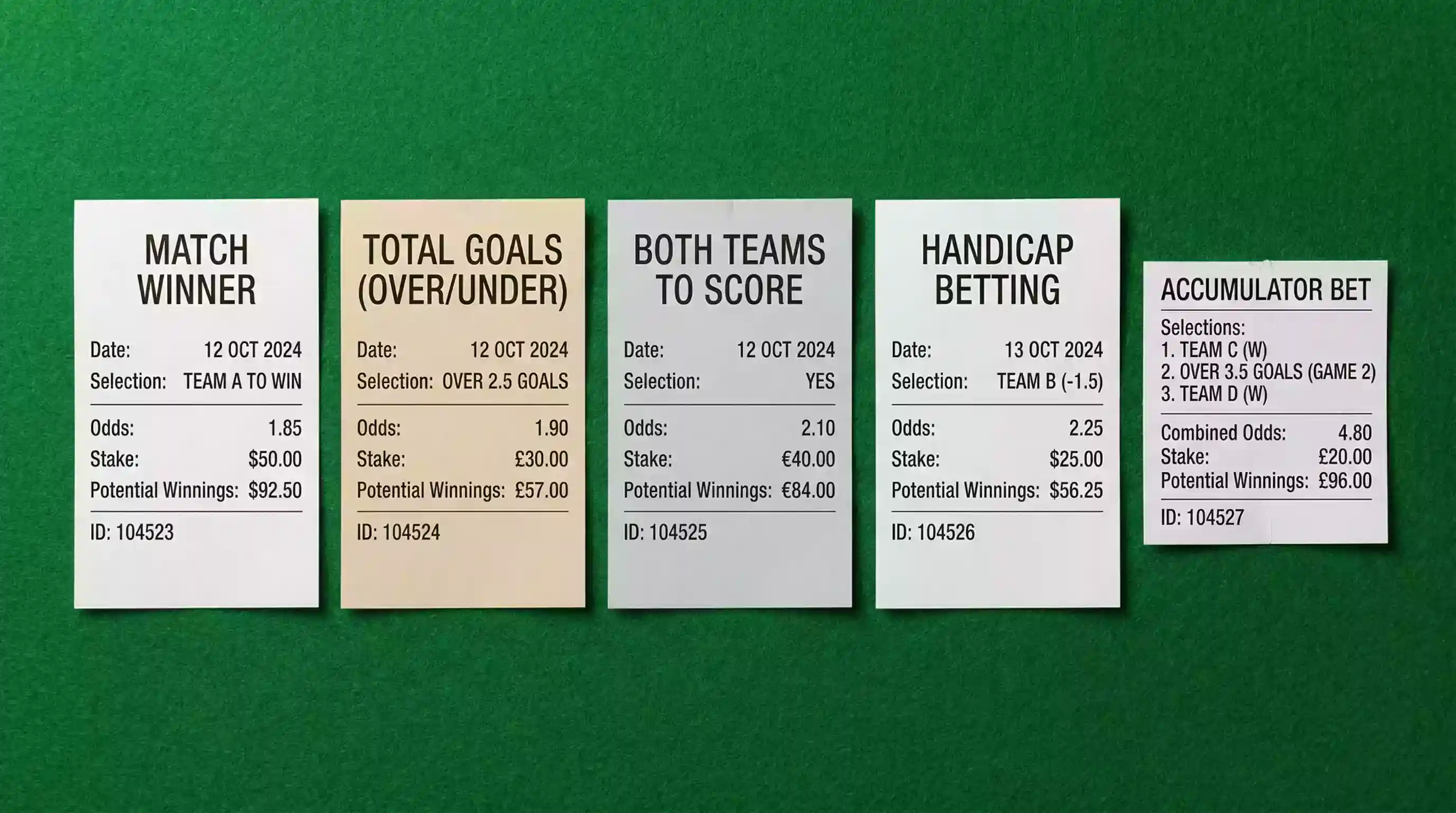
When I started working in this space, a friend asked me to explain every bet type available at a UK racecourse. I thought it would take ten minutes. It took an hour, and by the end we had covered singles, multiples, each-way permutations, exotic pools and multi-race accumulators. The UK betting landscape is one of the richest and most varied in the world, and even experienced punters regularly discover bet types they have never tried. This guide maps the entire terrain – from the simplest Win bet to the most complex wheel structure – so you can see where each wager sits in the hierarchy and which ones deserve a place in your strategy.
Win, Place and Each-Way: The Foundation Bets
A Win bet is the purest form of horse racing wager: you back a horse to finish first, and if it does, you are paid at the agreed odds. A Place bet backs your horse to finish in the places – typically first or second in fields of 5-7 runners, first, second or third in fields of 8-15, and first through fourth in handicaps of 16 or more. Each-way is two bets in one: a Win bet and a Place bet at the same stake. If your horse wins, both bets pay. If it places but does not win, only the Place bet pays, usually at a quarter or a fifth of the Win odds.
These are the bets most punters start with and many never leave. They are simple, the risk is contained to a single selection, and the returns are known at the point of placing the bet when using a fixed-odds bookmaker. On the Tote, Win and Place bets enter the respective pools and pay the declared dividend, with a 16% deduction on both pool types.
Each-way terms vary by fixture and race type. Standard place terms on the Flat are one-quarter odds for places in most races, but some bookmakers offer enhanced terms – particularly at festival meetings – extending to one-fifth odds or extra places. Understanding your place terms before you bet is essential, because the each-way calculation directly affects your return on placed horses.
Doubles, Trebles and Accumulators: Multi-Race Bets
A Double links two selections across two different races. Both must win for the bet to pay. The return from the first winner rolls into the stake on the second. A Treble does the same across three races, and an Accumulator extends the chain to four or more. The appeal is obvious: the cumulative odds can produce large returns from small stakes. The risk is equally obvious: one loser kills the entire bet.
Multiples are fixed-odds bets placed with bookmakers. They are not available on the Tote in the same form, though the Tote’s Placepot and Jackpot serve a similar function by requiring correct selections across multiple races within a single meeting.
I rarely use accumulators in my own betting because the probability of selecting four or more consecutive winners is very low, and the bookmaker margin compounds with each added leg. But they serve a purpose for punters seeking high returns from minimal outlay – the entertainment value is real, even if the expected value is negative.
Exotic Bets: Forecast, Tricast, Superfecta and Quinella
This is where the complexity – and the opportunity – ramps up. Exotic bets require you to predict multiple finishing positions within a single race, and they operate through the Tote’s pool system with a 25% deduction on most exotic pool types.
A Forecast (Exacta in international parlance) asks you to name the first and second finishers in order. A Tricast (Trifecta) extends this to first, second and third. A Superfecta pushes to the first four. A Quinella (Swinger on the Tote) requires you to name two horses to finish in the first two places in either order – the order-free equivalent of the Forecast.
Each of these can be placed as a straight bet (one specific combination), a combination bet (every permutation of your selected horses), or a wheel bet (one or more keyed horses with the remaining positions filled by selected runners). The cost escalates with each additional position and each additional runner included. A straight Forecast costs one unit. A combination Forecast on three horses costs six units. A full Exacta wheel on a 12-runner race with one key costs eleven units. The Tote’s 25% exotic deduction is the same across pool types, with deductions ranging from 16% on Win pools to around 28% on Jackpot pools.
Exotic bets are my primary area of focus because the dividend potential is significantly higher than straight Win or Place bets, and the wheel structure allows you to control cost while maintaining meaningful coverage. The trade-off is complexity: you need to understand the formulas, the cost tables and the pool mechanics before you can bet exotics effectively.
Where Wheel Bets Sit in the UK Betting Hierarchy
Wheel bets are not a separate bet type – they are a staking structure applied to exotic bets. A wheel takes a Forecast, Tricast or Superfecta and organises the combinations around one or more keyed horses. This structure sits at the top of the complexity hierarchy because it requires the most decisions: which horse to key, which position to fix, how many runners to include in the open legs, and what unit stake to set.
In the UK betting ecosystem, wheels are exclusively a Tote product. Bookmakers offer straight and combination forecasts and tricasts, usually paying at computer-calculated rates, but they do not typically offer the wheel structure as a staking option. If you want to build a wheel bet, you go to the Tote – either on-course, through the Tote website, or via bookmaker platforms that offer Tote pool access.
The hierarchy from simplest to most complex runs: Win, Place, Each-Way, Double, Treble, Accumulator, Straight Forecast, Combination Forecast, Exacta Wheel, Straight Tricast, Combination Tricast, Trifecta Wheel, Superfecta Wheel. Each step up adds a decision point, increases the cost potential, and raises the dividend ceiling. Where you operate within this hierarchy should match your knowledge, bankroll and willingness to engage with the mathematics of exotic pool betting. For a complete breakdown of wheel bet formulas and cost calculations, the main wheel bet calculator guide covers every structure from exacta through superfecta.
Are wheel bets available on every UK race?
Wheel bets are available on any race where the Tote offers an Exacta, Trifecta or Superfecta pool. This covers the vast majority of UK races with five or more runners. Very small fields – fewer than five runners – may not have an Exacta pool, and the Trifecta requires a minimum of three runners. The Superfecta needs at least four. If the pool is offered, the wheel structure is available as a staking option.
Which exotic bet type has the lowest minimum stake on the Tote?
The minimum unit stake across all Tote exotic pools is typically 1 pound on most platforms. A straight Forecast at 1 pound per unit is the cheapest exotic bet – one combination, one pound. Combination and wheel bets cost more because they include multiple combinations, each at the minimum unit stake. Some digital Tote partners may offer lower unit minimums on selected pool types, but 1 pound is the standard baseline.
Created by the ”Horse Racing Wheel bet Calculator” editorial team.