Wheel Bet Bankroll Management: Setting Session Budgets for Exotic Bets
 Available in US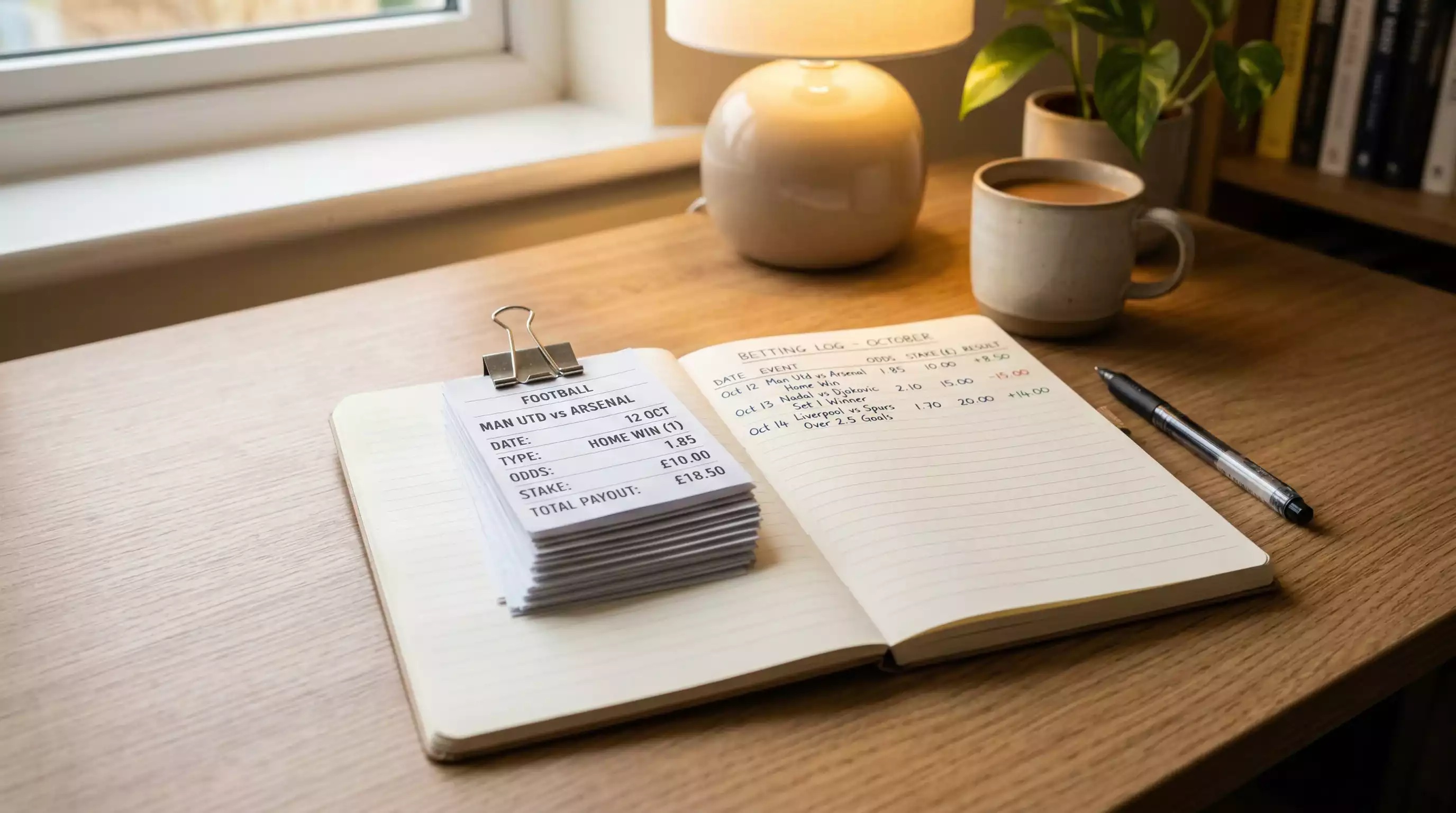
Wheel bets are the only bet type I know where the ticket price can genuinely surprise you if you have not done the maths in advance. A single trifecta wheel on a big-field handicap can cost more than some punters budget for an entire raceday. I have been there myself – early in my career I built a superfecta wheel on a 14-runner race without checking the combination count first. The ticket came to over 700 pounds. I did not have 700 pounds allocated to that race, let alone to one bet. That was the afternoon I started treating session budgeting not as a nice-to-have, but as the absolute prerequisite for exotic betting.
A Practical Session Budget Framework for Wheel Bets
Overall UK horse racing betting turnover dropped 4.3% in 2025 compared to the previous year, and the average turnover per race fell by 5.6%. The pools are shrinking, which means dividends are becoming more volatile – and volatile dividends demand more disciplined bankroll management, not less.
The framework I use is simple. Before a meeting starts, I set a total session budget – the maximum I am prepared to spend across all races that day on exotic bets. Then I divide that budget by the number of races I plan to play. That gives me a per-race budget, which becomes the hard ceiling for each individual wheel.
For a typical Saturday with five target races, I might set a session budget of 150 pounds. That is 30 pounds per race. From there I work backwards through the combination count: on a 10-runner race, a one-key trifecta wheel costs 72 combinations at a pound, which exceeds my 30-pound ceiling. So I either switch to a two-key wheel (8 combinations, 8 pounds), a part wheel with restricted second-place runners, or an exacta wheel (9 combinations, 9 pounds). The per-race budget determines the structure, not the other way around.
This approach prevents the most dangerous habit in exotic betting: letting conviction override arithmetic. It does not matter how strongly you fancy your key horse – if the wheel costs more than your per-race allocation, you restructure the bet or skip the race.
Setting a Cost Cap Per Race and Per Meeting
A single number – the per-race cap – does more for your long-term results than any handicapping system. I learned this the hard way over two losing seasons where my strike rate on exotics was actually quite good but my P&L was negative because the winning returns did not cover the accumulated ticket costs of the losing bets.
My per-race cap varies by fixture quality. For midweek evening meetings I set it at 15 to 20 pounds. For Saturday cards at Premier fixtures I push it to 40 pounds, because pool sizes are larger and dividends tend to be more stable. For festival meetings – Cheltenham, Royal Ascot, the Ebor – I will stretch to 50 or even 60 pounds per race, but only on races where the pool depth justifies the outlay.
The meeting-level cap is equally important. Even if I have four target races and each fits within a 40-pound per-race cap, the total meeting spend of 160 pounds needs to be within a threshold I am comfortable absorbing as a total loss. Because that is the realistic downside scenario: every wheel misses, every ticket loses, and you walk away having spent the full session budget. If that number makes you uncomfortable, reduce it until it does not.
I track my session spends in a spreadsheet alongside results. Over the past 18 months, my average session spend on exotics has been 87 pounds across all races played, with a median of 72. The variance comes from field sizes – some sessions feature small Jump fields that keep costs low, while big Flat Saturdays push the total up. The key metric I watch is the ratio of total session spend to winning sessions: across all meetings, roughly one in four produces a net positive return from exotics. That 25% hit rate needs each winning session to return at least four times the average session spend to break even, and comfortably more to generate a profit.
Matching Bankroll Size to Wheel Bet Ambition
The overall betting turnover on UK racing has fallen 10.7% since 2023, and that decline trickles down directly into pool sizes. Smaller pools mean bigger dividend swings, which means more sessions where you lose your full budget and more sessions where you hit a large return. The variance increases both ways, and your bankroll needs to absorb the downswings.
A working rule I have settled on over nine years: your exotic betting bankroll should be large enough to cover at least 15 losing sessions in a row. If your average session spend is 100 pounds, your starting bankroll for exotics should be at least 1,500 pounds – ring-fenced entirely from other betting or spending. This is not about how likely a 15-session losing streak is; it is about ensuring that when one happens (and it will), you are still in the game to capture the winning session that follows.
There is a temptation to increase session budgets after a big win. Resist it. The structure works because the caps remain constant regardless of recent results. A good session does not mean the next one is more likely to pay. The maths of pool betting is path-independent: last week’s tricast dividend has zero influence on this week’s. Keep your per-race and per-session caps steady, bank the profits from winning sessions, and only revisit the caps if your total bankroll has grown or shrunk by more than 25% from its baseline.
Exotic betting is a game of intermittent returns. You will lose more sessions than you win, and the wins need to be large enough to compensate. Session budgeting is the mechanism that keeps you alive between wins, prevents emotional over-commitment on individual races, and ensures that when the right result lands, your ticket is in the pool. Everything else in wheel bet strategy – key horse selection, part wheel construction, field size analysis – means nothing if you run out of bankroll before the variance swings your way. Set the budget first. Build the wheel second. That order never changes. For more on structuring your bets efficiently within a fixed budget, the full wheel vs part wheel strategy guide covers how to choose structures that match specific spend levels.
What bankroll do I need for regular wheel betting?
A practical minimum is 15 times your average session spend. If you typically spend 80 to 100 pounds per meeting on exotic bets, a starting bankroll of 1,200 to 1,500 pounds ring-fenced for exotics gives you enough runway to absorb losing streaks without being forced out of the market before the variance turns.
Should I adjust my unit stake or my number of combinations first?
Adjust the number of combinations first by adding key horses or narrowing the non-key legs. Reducing combinations changes the structure of your bet but preserves your per-unit return. Reducing unit stake preserves the structure but cuts your return proportionally. Where possible, restructure the wheel to fit your budget at your preferred unit stake rather than diluting the stake across the same combination count.
Created by the ”Horse Racing Wheel bet Calculator” editorial team.