Exacta Wheel Calculator: Forecast Wheel Costs for UK Horse Racing
 Available in US
The exacta – known as the forecast in UK betting – is the gateway exotic bet. Pick two horses, predict which finishes first and which finishes second, collect if you are right. Simple to understand, brutally hard to nail, and surprisingly affordable to wheel. Over nine years of analysing pari-mutuel structures, I have come to see the exacta wheel as the exotic bet that best balances cost against opportunity, particularly for bettors stepping up from straight win bets for the first time.
What makes the exacta wheel interesting is the position question. Unlike a trifecta wheel, where you fix one horse and let the remaining two places sort themselves out, an exacta wheel forces you to decide which end of the bet your key horse anchors. Do you key it to win and wheel the rest for second? Or do you key it for second place and let the field fight over first? That single decision – top wheel or bottom wheel – changes the character of the bet entirely, and most guides I see online barely mention it.
The UK Tote takes a 25% deduction from the Exacta pool, identical to the Trifecta and Superfecta. With that kind of structural cost, understanding the exact price of your ticket before you commit is essential. This guide covers the full and part exacta wheel formulas, a ready-reckoner cost table from 5 to 20 runners, the quinella comparison that every forecast bettor should understand, and the mechanics of how the Tote processes your stake. For the complete picture across all wheel bet types, the horse racing wheel bet calculator brings everything together in one place.
Table of Contents
- How an Exacta Wheel Structures Your Forecast Bet
- Full Exacta Wheel Formula With Worked Examples
- Part Exacta Wheel: Selecting Runners for Second Place
- Exacta Wheel Cost Table: 5 to 20 Runners
- Exacta Wheel vs Quinella: Order Requirement and Cost Trade-off
- UK Tote Forecast Pool: Deductions and Dividend Mechanics
- Frequently Asked Questions
How an Exacta Wheel Structures Your Forecast Bet
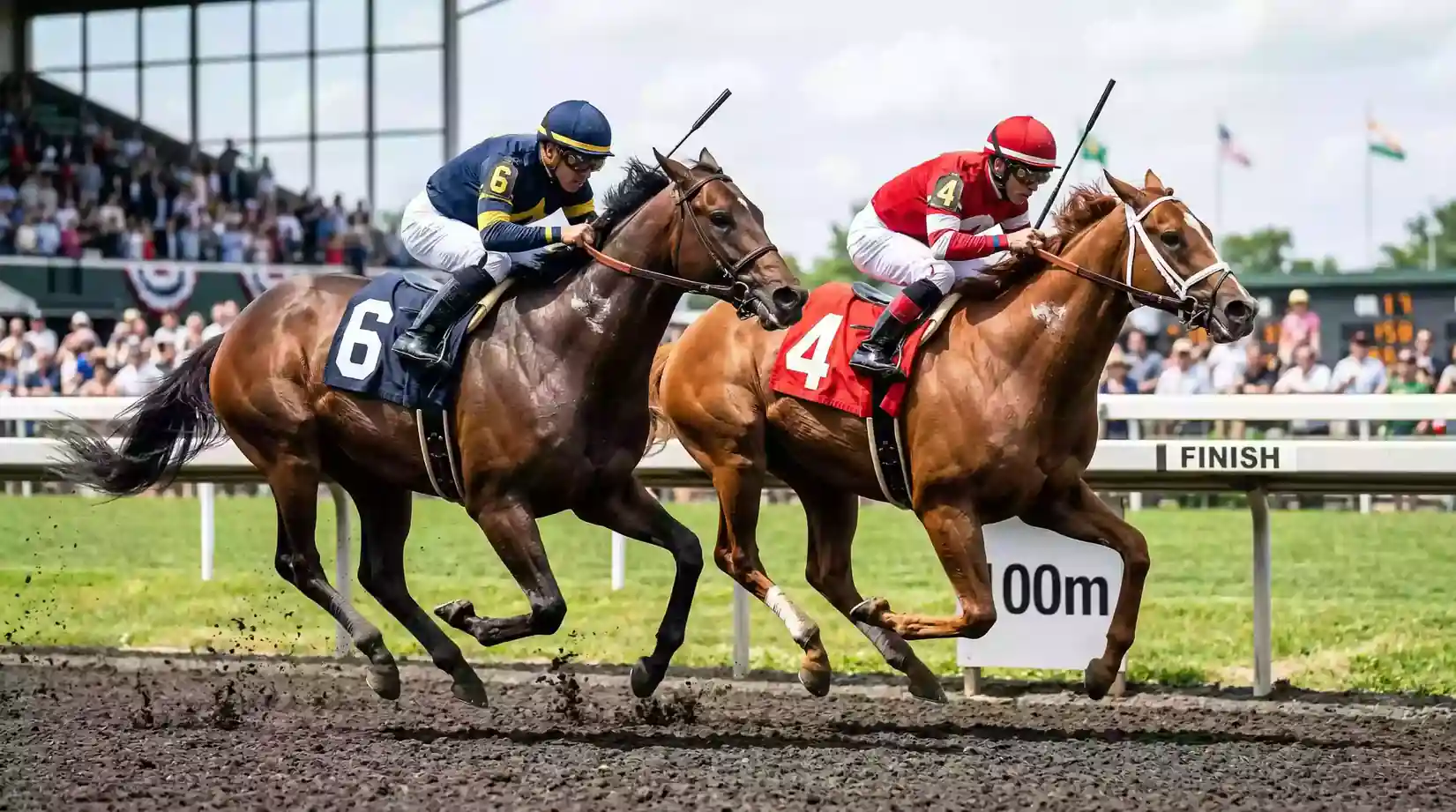
Most bettors think of the exacta as a single bet: horse A first, horse B second. That is a straight forecast, and it pays handsomely when it lands because the odds of predicting two specific finishing positions are steep. The wheel takes a different approach. Instead of naming both horses, you name one – your key – and let a group of other runners fill the remaining position. The wheel generates every combination between your key horse and the selected group, covering multiple outcomes with a single structured ticket.
Think of it as a net rather than a spear. A straight forecast is a spear – one precise throw at one precise target. An exacta wheel is a net cast across the water, designed to catch whichever fish swims into the frame alongside the one you have already identified. The cost of that net depends on how wide you cast it, and that is where the formula comes in.
In a full exacta wheel, you key one horse into a fixed position and wheel every other runner in the field through the open position. In a 10-runner race, that means your key horse paired with each of the other 9 runners – giving you 9 combinations. At a 1 pound unit stake, the ticket costs 9 pounds. Compare that with a full trifecta wheel in the same race at 72 combinations, and you can see why the exacta wheel is the more accessible entry point into exotic betting.
The structure rewards bettors who have one strong opinion. You do not need to know the entire finishing order. You just need to be right about one horse and its approximate position – first or second – and let the wheel do the rest.
Top Wheel vs Bottom Wheel: Position Matters
I spent my first two years of exotic betting exclusively using top wheels – keying my selection to win and wheeling the field for second. It was not until a jumps season at Kempton that I realised I was leaving money on the table. There was a mare I rated highly but who had a habit of finding one too good in graded company. She kept finishing second. A bottom wheel – keying her for the runner-up spot and wheeling the field for first – would have landed three times that winter. A top wheel would have landed none.
The distinction is straightforward. A top wheel fixes your key horse in first place and rotates the remaining runners through second. A bottom wheel does the opposite: your key horse is locked into second place, and every other runner cycles through first. The cost is identical – both produce n – 1 combinations in a full wheel – but the strategic logic is completely different.
Top wheels suit races where you have a strong winner but the runner-up position is wide open. A class dropper in a weak race, a horse returning to a favoured course, a front-runner on fast ground with a clear tactical advantage – these are top-wheel candidates. You are confident about who wins but cannot separate the rest.
Bottom wheels work best when the finish looks predictable but the winner is uncertain. Races with two or three market leaders who might fight out the finish, while your key horse is the type to run a solid second without ever threatening the principals, are ideal bottom-wheel territory. Jump racing produces these scenarios frequently – a reliable staying chaser who always finds one better in Grade 1 company but rarely drops below second.
The dividend implications differ too. Top-wheel exactas tend to pay less because the winning horse is often a shorter-priced contender, and a shorter-priced runner in first place compresses the forecast return. Bottom-wheel exactas can produce larger dividends because your key horse in second is not the outright winner, meaning the first-place finisher is often at bigger odds, inflating the payout.
Full Exacta Wheel Formula With Worked Examples
The full exacta wheel formula is the simplest in exotic betting. With one key horse in a race of n runners:
Combinations = n – 1
That is it. No permutations, no factorials, no multiplication chains. You are pairing your key horse with every other runner in a single fixed arrangement – key first, other horse second (or vice versa for a bottom wheel). Each pairing is one combination.
Let me walk through three field sizes to show how the cost scales. In 2025, average UK Flat fields sat at 8.90 runners. Rounding to 9:
Combinations = 9 – 1 = 8 combinations = 8 pounds at a 1 pound unit
That is an 8 pound ticket to cover every possible runner-up behind your key horse. Compare that with a win bet of 8 pounds at, say, 5/1 – both cost the same, but the exacta wheel potentially returns far more because forecast dividends reflect the difficulty of predicting two positions rather than one.
At Premier Flat fixtures averaging 11.02 runners, round to 11:
Combinations = 11 – 1 = 10 combinations = 10 pounds
And in a big-field handicap with 16 runners:
Combinations = 16 – 1 = 15 combinations = 15 pounds
Notice the scaling. Unlike trifecta wheels, where cost grows quadratically (the curve steepens with each extra runner), exacta wheel cost grows linearly. Adding one runner adds exactly one combination. This linear relationship is what makes exacta wheels so budget-friendly even in large fields. A 20-runner race produces only 19 combinations – 19 pounds at minimum stake. A trifecta wheel in the same race would cost 342 pounds.
Two key horses reduce the bet to a single combination – a straight forecast. Key horse A to win, key horse B for second: one combination, one unit stake. At that point, you have abandoned the wheel structure entirely and are placing a traditional forecast. The wheel only adds value when you have uncertainty in at least one position.
For bettors who want to cover both directions – key horse A first with B second, and B first with A second – that is a reverse forecast, which costs exactly 2 combinations. Still cheaper than wheeling either horse against the full field, but it narrows your coverage to just two runners.
Part Exacta Wheel: Selecting Runners for Second Place
There is a race I remember from Ascot – a 20-runner Royal Hunt Cup where I keyed the favourite to win and wheeled the entire field for second. Nineteen combinations at 2 pounds each: 38 pounds. The favourite won, and a 50/1 shot finished second. The dividend was spectacular. But here is the thing: I could have excluded at least eight runners on form grounds and still caught that 50/1 shot, saving myself 16 pounds in the process. Part-wheeling is about identifying which runners you can confidently exclude, not which ones you want to include.
The part exacta wheel formula is even simpler than the full wheel:
Combinations = number of selected runners for the open position
If you key a horse to win and select 6 runners for second place, you have 6 combinations. If you select 4, you have 4. The cost scales in exact proportion to how many runners you include in the non-key leg.
Where part-wheeling gets interesting is when you apply it asymmetrically across both positions. Instead of keying one horse, you can select a group for first place and a different group for second. Say you narrow the winner to three contenders and believe second place will come from a broader group of six. Your combinations are 3 x 6 = 18, minus any overlapping runners who appear in both groups (since a horse cannot finish first and second simultaneously). If two runners appear in both groups, subtract those overlaps: 18 – 2 = 16 combinations.
This multi-group approach works particularly well in competitive handicaps where there is no standout key horse. Instead of forcing a single key into the structure, you acknowledge that two or three horses have a similar chance of winning and spread your coverage accordingly. The cost is higher than a single-key wheel with the same number of open-leg runners, but the coverage is meaningfully broader.
The discipline required is in the exclusion process. Every runner you remove from the open leg saves you one combination – one unit stake. In a 15-runner race, trimming the second-place contenders from 14 (full wheel) to 8 (part wheel) saves 6 pounds at minimum stake. The question you need to ask about each excluded runner is not “could this horse finish second?” – almost anything can – but “is this horse realistically likely to finish second given the pace shape, ground conditions and class of the race?” If the answer is a clear no, cut it.
Exacta Wheel Cost Table: 5 to 20 Runners
The exacta wheel cost reference is mercifully straightforward. Because combinations scale linearly, the pattern is instant to grasp. A 5-runner race produces 4 combinations (8 pounds at a 2 pound unit), 6 runners give you 5 (10 pounds), 7 runners 6 (12 pounds), 8 runners 7 (14 pounds), 9 runners 8 (16 pounds), 10 runners 9 (18 pounds), 11 runners 10 (20 pounds) and 12 runners 11 (22 pounds). From there the progression continues at the same steady pace: 13 runners produce 12 combinations (24 pounds), 14 runners 13 (26 pounds), 15 runners 14 (28 pounds), 16 runners 15 (30 pounds), 17 runners 16 (32 pounds), 18 runners 17 (34 pounds), 19 runners 18 (36 pounds) and 20 runners 19 (38 pounds).
Even at the extreme end – a 20-runner field – a full exacta wheel costs just 19 pounds at minimum stake. That is a fraction of the 342 pounds a trifecta wheel would cost in the same race. This affordability is the exacta wheel’s greatest strength and the reason I recommend it as the starting point for anyone new to exotic betting structures.
Premier Flat fixtures with their average of 11.02 runners produce a 10-combination full wheel – 10 pounds at minimum stake. For most bettors, that is a negligible cost relative to the potential forecast dividend. Even at a 5 pound unit stake, you are only committing 50 pounds for complete coverage behind your key horse, which makes the exacta wheel viable at higher unit stakes in a way that trifecta and superfecta wheels simply are not.
Those figures also highlight why part-wheeling an exacta is less urgent than part-wheeling a trifecta. If a full exacta wheel in a 14-runner race costs 13 pounds, the savings from trimming it to 8 runners (5 pounds saved) may not justify the risk of missing the right combination. With trifecta wheels, where the same trim saves dozens of pounds, the cost-benefit calculation tips much more firmly toward part-wheeling.
Exacta Wheel vs Quinella: Order Requirement and Cost Trade-off
Every few months, someone asks me whether they should be betting exacta wheels or quinella wheels. The answer depends on one thing: how confident are you about which of your two selected horses finishes in front of the other?
A quinella – called a reverse forecast or swinger on UK pools – requires you to pick two horses that finish first and second, but in either order. You do not need to specify which one wins and which runs second. An exacta demands exact order: your first-place pick must finish first, and your second-place pick must finish second. That extra precision is what separates the two, and it drives everything about their cost and dividend structures.
In a full wheel, the cost difference is exactly twofold. A full exacta wheel with one key horse produces n – 1 combinations. A full quinella wheel with the same key produces the same n – 1 combinations, but because order does not matter, the quinella formula for selecting two from n runners uses a combination rather than a permutation. However, when you wheel a key horse against the field in a quinella, you still get n – 1 pairings – each pairing covers both finishing orders. So the combination count is identical, but each quinella combination effectively covers two exacta outcomes.
The real cost difference emerges in box bets and multi-runner structures. A quinella box of 5 runners costs 10 combinations (5 choose 2). An exacta box of 5 runners costs 20 combinations (5 x 4) because every pair appears twice – once in each order. That is where the quinella saves money: when you cannot separate the finishing positions of multiple runners, the quinella halves your ticket cost by removing the order requirement.
The trade-off is in the dividend. Exacta dividends are almost always larger than quinella dividends for the same finishing pair, because the exacta pool rewards the harder prediction. If horse A beats horse B by a nose, the punters who predicted that specific order share a smaller slice of a typically larger pot than those who simply paired A and B without specifying order. The Tote applies the same 25% deduction to both pools, but the dividend structures diverge because the quinella attracts more winning tickets per result.
My rule of thumb: use quinella wheels when you have a view on which two horses will fill the first two places but genuinely cannot separate them on finishing position. Use exacta wheels when you have a clear opinion about which horse wins – when you can picture the race and see your key horse crossing the line first, even if the runner-up is uncertain. The quinella is a bet on involvement; the exacta is a bet on hierarchy.
UK Tote Forecast Pool: Deductions and Dividend Mechanics
When you submit an exacta wheel to the UK Tote, your stake enters the Forecast pool. The Tote’s pari-mutuel system works like a lottery in its distribution mechanics – punters pick their horses and put their money into a cumulative pool, and everyone with a winning ticket shares a percentage of the pot. That percentage is what remains after the Tote applies its deduction.
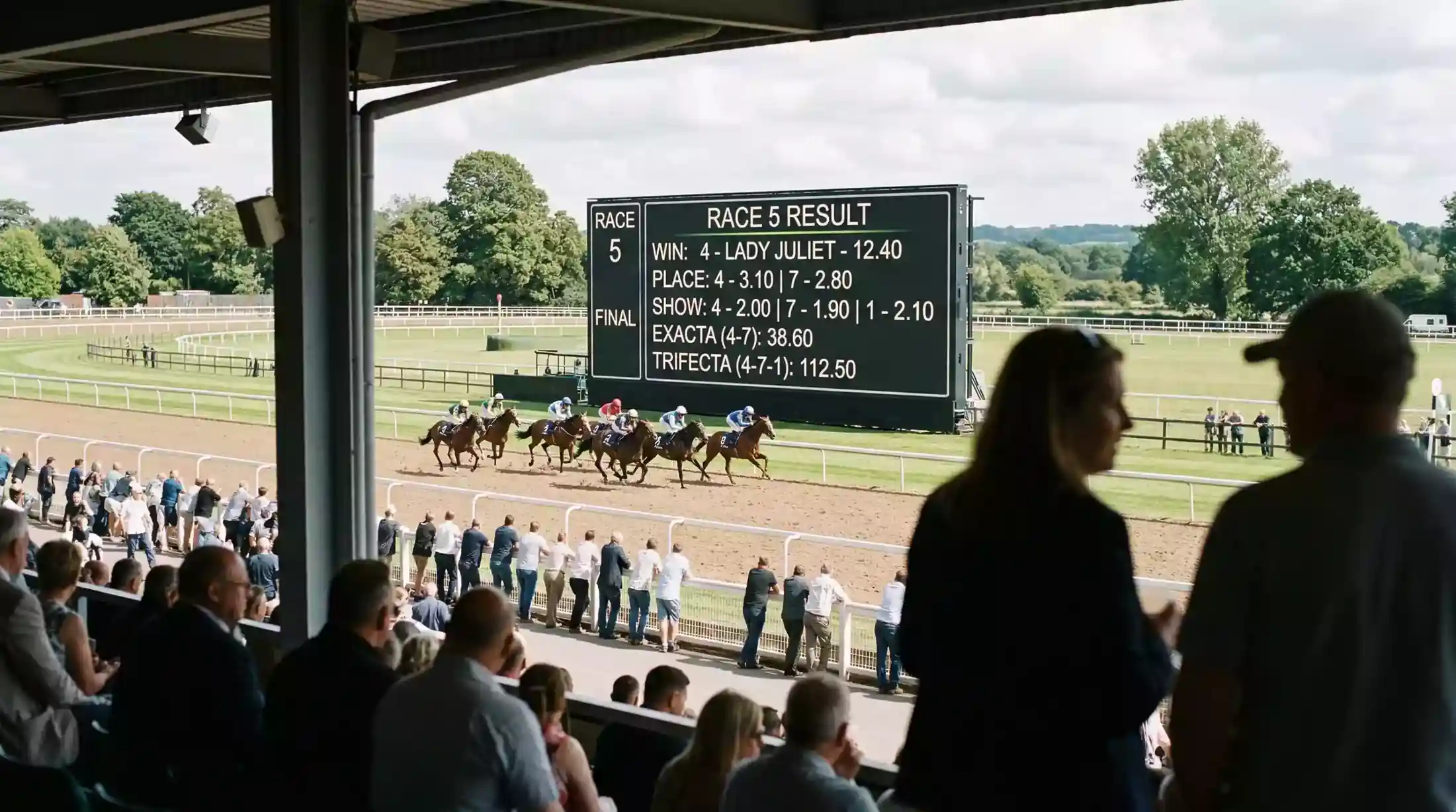
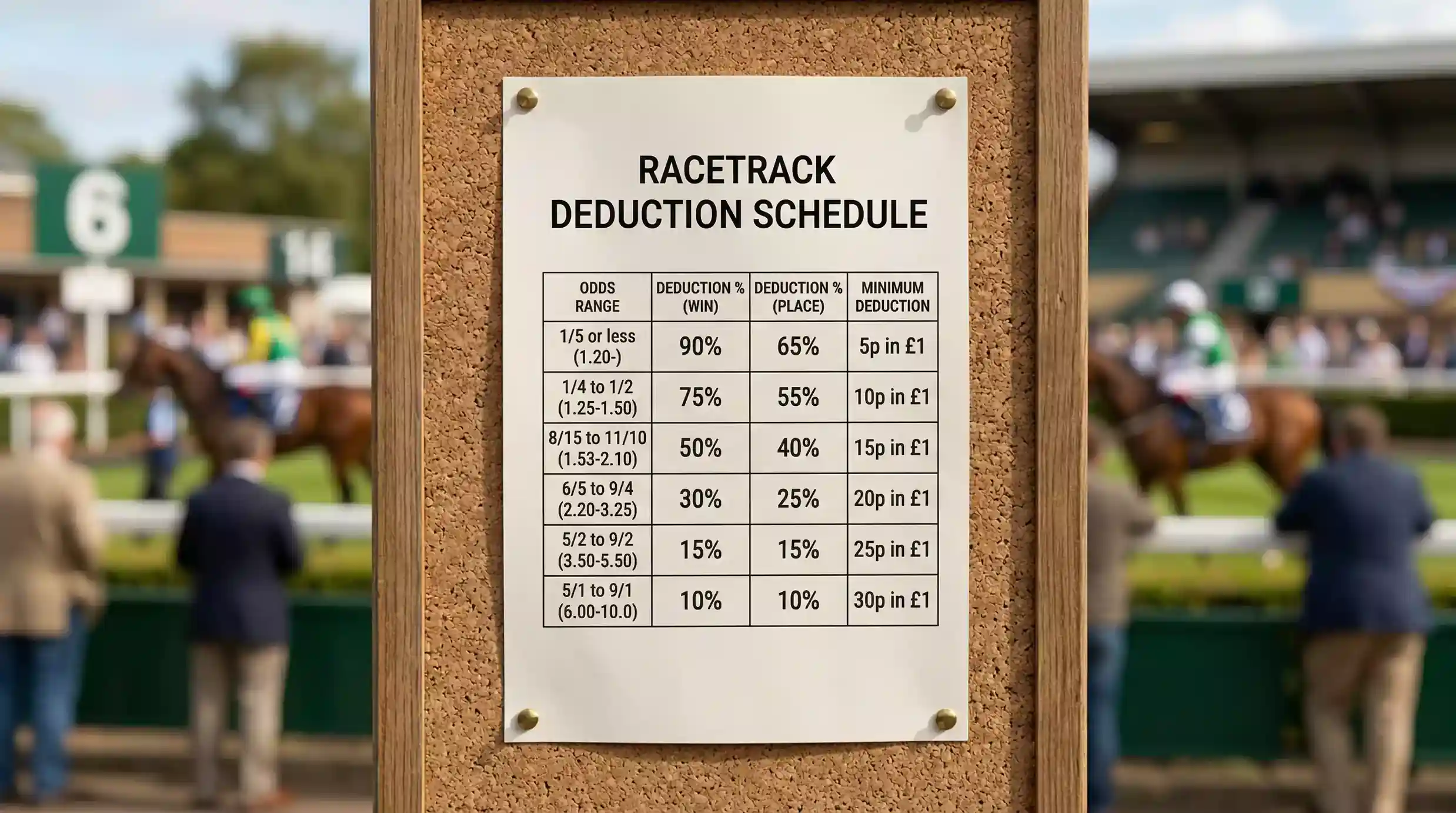
For the Forecast pool, the deduction is 25%. On a 10 pound exacta wheel ticket, 7.50 pounds enters the dividend pool and 2.50 pounds goes to the operator. That 25% rate is consistent across all exotic pools – Trifecta and Superfecta carry the same deduction. The Win pool, by contrast, operates at a lower 16% deduction, while other pool types fall between 16% and 28% depending on complexity.
The declared dividend is expressed as a return per 1 pound unit stake. If the Forecast dividend for a race is declared at 45 pounds, you receive 45 pounds for every 1 pound combination in your wheel that matches the first and second finisher in exact order. On a full wheel of 10 combinations where one lands, you have spent 10 pounds and received 45 pounds – a net profit of 35 pounds. If two of your combinations land (which cannot happen in an exacta, since there is only one correct order of finish), the arithmetic would differ, but the exacta produces one correct result per race by definition.
Pool size matters enormously for dividend stability. At major Saturday meetings and Premier fixtures, the Forecast pool can run into tens of thousands of pounds. At a quiet Monday fixture with seven runners, the pool might be only a few hundred. Small pools produce wildly volatile dividends – a single 50 pound bet on the winning combination can cut the declared return dramatically. This is one reason I prefer to target exacta wheels at meetings with higher anticipated turnover, where my own bet represents a negligible proportion of the total pool and the dividend more accurately reflects the true difficulty of the prediction.
One point that confuses newcomers: the Tote dividend is a gross figure, not a net figure. It already accounts for the 25% deduction. You are not taxed again when you collect. The 45 pounds declared is 45 pounds received. Bookmaker forecast bets, by contrast, pay at a computer-generated forecast price based on Industry Starting Prices – no pool, no deduction, but the bookmaker’s margin is embedded in how the computer forecast is calculated. Whether one system offers consistently better value than the other depends on the specific race, the pool depth, and the popularity of the winning combination.
Frequently Asked Questions
What is the difference between a top wheel and a bottom wheel in an exacta?
A top wheel keys your selected horse in first place and wheels the remaining runners through second place. A bottom wheel does the opposite – your key horse is fixed in second place, and every other runner rotates through first. The cost is identical for both structures (n – 1 combinations in a full wheel), but the strategic reasoning differs. Top wheels suit races where you have a confident winner but uncertain runner-up. Bottom wheels work best when your strongest opinion is about a horse that consistently finishes second without threatening to win.
How does the quinella compare to an exacta wheel on cost?
In a single-key full wheel, the combination count is the same – n – 1 for both quinella and exacta. The real cost difference shows up in box bets: a quinella box of 5 runners costs 10 combinations (5 choose 2), while an exacta box costs 20 (5 x 4) because order matters. Quinella dividends are typically smaller than exacta dividends for the same finishing pair, since the quinella rewards a less precise prediction. The Tote applies a 25% deduction to both pools.
Are forecast wheels available through all major UK betting platforms?
The Tote offers forecast wheels as part of its standard pool betting interface, including full wheels, part wheels and combination forecasts. Major UK bookmakers such as Coral, Betfred and William Hill offer straight and reverse forecasts (covering both finishing orders), but their forecast products use computer-generated prices rather than pool dividends. Full wheel structures with flexible runner selection are primarily a Tote product. Some bookmaker apps allow combination forecasts, but the flexibility to build custom wheels with selective runner inclusion varies by platform.
Written by the editors at Horse Racing Wheel bet Calculator.