Rule 4 Deductions and Exotic Pool Bets: What UK Bettors Need to Know
 Available in US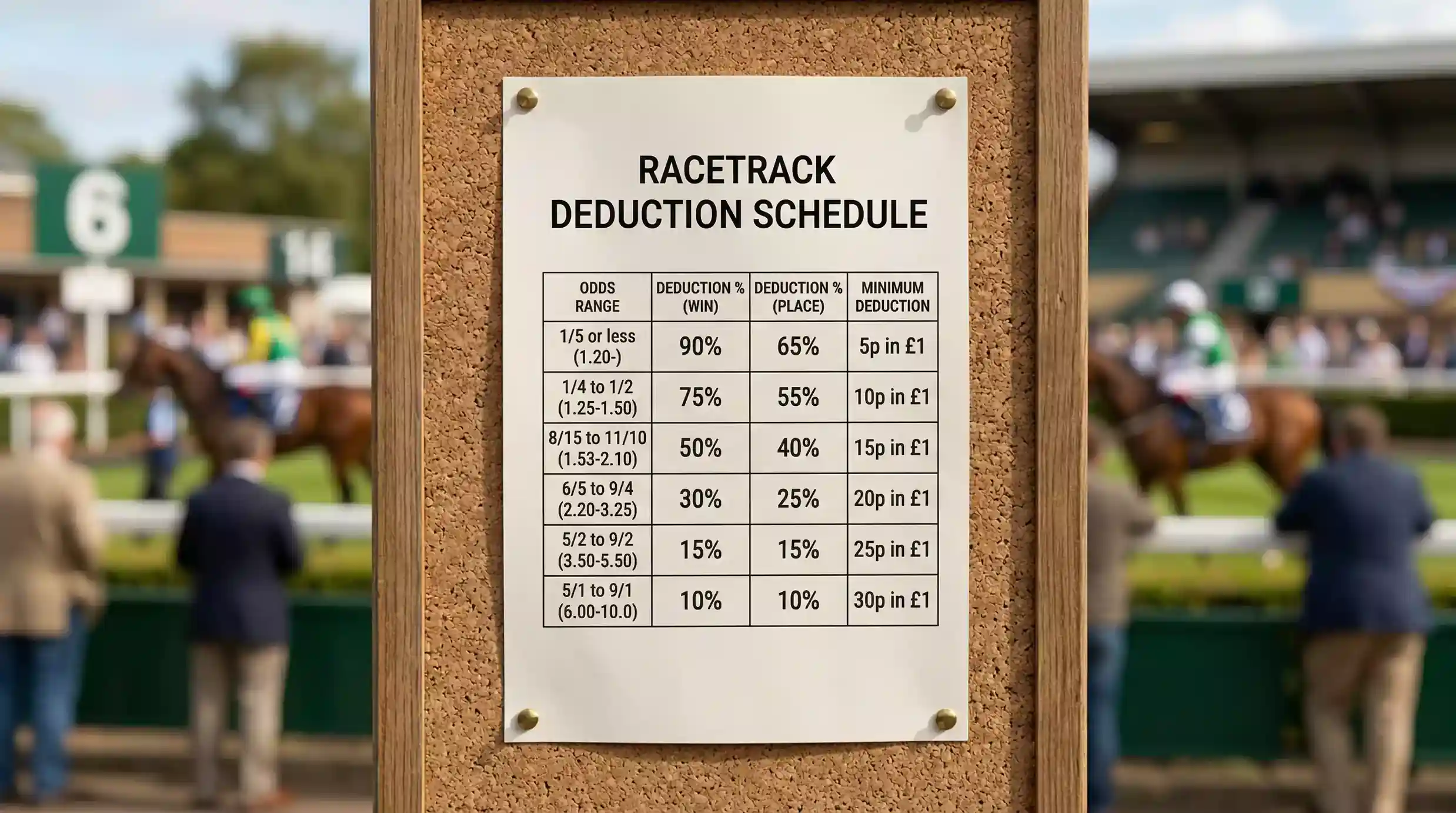
Rule 4 is one of the most misunderstood concepts in UK racing betting, and the confusion doubles when exotic bets enter the picture. I have lost count of how many times someone has asked me whether a Rule 4 deduction will be applied to their Tote trifecta after a non-runner was announced. The answer is no – but the reasoning behind that answer reveals a fundamental difference between how pool bets and fixed-odds bets handle withdrawals. Getting this wrong does not just confuse you; it can lead you to avoid pool bets unnecessarily or to misunderstand the dividend you receive.
How Rule 4 Works in Fixed-Odds Betting
Rule 4 (named after Tattersalls’ Rule 4(c)) is a deduction applied to fixed-odds winning bets when a horse is withdrawn from a race after the market has formed but before the race is run. The purpose is to adjust payouts to reflect the changed market conditions – if a short-priced horse is withdrawn, the remaining runners’ true odds have shortened, and the deduction prevents bookmakers from paying out at odds that no longer reflect the actual contest.
The deduction scale is based on the withdrawn horse’s odds at the time of withdrawal. A 1/1 withdrawal triggers a 45p deduction from each pound of winnings. A 5/1 withdrawal triggers a 15p deduction. A 14/1 or bigger withdrawal triggers just a 5p deduction. The shorter the price of the withdrawn horse, the larger the impact on remaining odds and the bigger the Rule 4 deduction.
This system makes sense within the logic of fixed-odds betting: the bookmaker gave you a price based on a certain set of competitors, one competitor was removed, and the price needs adjusting. Without Rule 4, bettors who backed a remaining horse at, say, 5/1 when the race featured a strong favourite would still receive 5/1 even though the favourite’s withdrawal effectively made their horse a 3/1 shot. The deduction corrects for this.
Rule 4 and Tote Pools: A Different Mechanism
Tote pools do not apply Rule 4 deductions. Full stop. The mechanism is structurally unnecessary because pool betting self-corrects for withdrawals through a different process.
When a horse is withdrawn from a race, every Tote stake placed on combinations involving that horse is voided and refunded. The pool shrinks by the amount of the refunded stakes. The remaining pool – reduced by the void bets but still subject to the standard 25% deduction on exotics – is then distributed among the holders of winning combinations from the remaining runners.
The self-correction happens naturally: if a short-priced horse is withdrawn, a large chunk of the pool was probably staked on combinations involving that horse. Those stakes are refunded, the pool shrinks, and the dividend for the winning combination adjusts automatically to reflect the new market reality. No Rule 4 scale is needed because the pool mathematics handles the adjustment organically.
The UK Gambling Commission spokesperson noted in 2025 that gambling regulation should be balanced and proportionate, with those betting safely allowed to do so without interruption. The Tote’s withdrawal mechanism exemplifies this principle – it is automatic, transparent and requires no intervention from the bettor. Your ticket is recalculated, void combinations are refunded, and the remaining bet settles against the adjusted pool.
Practical Impact on Wheel Bet Holders
For wheel bettors, the absence of Rule 4 on Tote pools is both a benefit and a consideration. The benefit: you never see your winning dividend reduced by a percentage deduction after the fact. If your wheel lands, the declared dividend is what you receive per unit. No surprises, no post-race adjustments, no need to check which Rule 4 scale applies.
The consideration: the pool itself may have shrunk due to refunds, which can reduce the dividend compared to what it would have been with a full field. If a heavily backed horse is withdrawn and significant stakes are refunded from the pool, the net pool available for distribution is smaller. Your dividend per unit reflects that smaller pool, even though no Rule 4 deduction was explicitly applied to your bet.
In practice the effect is usually modest. The average Flat field in 2025 was 8.90 runners, and most non-runners on raceday are horses that attracted limited exotic interest. The pool impact of their withdrawal is typically small. But when a market leader is scratched – the 5/4 favourite that half the exotic bettors keyed in their wheels – the pool can contract noticeably, and the dividend on the remaining outcomes reflects that contraction.
I have developed a simple habit: when a non-runner is announced on a race I have already wheeled, I mentally note whether it was likely to feature in many other bettors’ combinations. If it was a well-fancied horse, I expect the dividend to compress slightly. If it was an outsider, the pool impact is negligible. This does not change my bet – it is already placed – but it calibrates my expectations so the declared dividend does not come as a surprise.
Let me walk through a concrete example. Say you placed a one-key trifecta wheel on a 10-runner race with a fixed-odds bookmaker offering a tricast. Your key horse wins, and the tricast pays 200 pounds to a 1-pound unit before deductions. A 9/4 shot was withdrawn 30 minutes before the off, triggering a Rule 4 deduction of 25p in the pound. Your payout drops to 150 pounds. On the Tote, the same result in the same race would pay you the full declared dividend – no Rule 4 adjustment. The pool itself is smaller because the withdrawn horse’s combinations were refunded, so the declared dividend might be 180 or it might be 210 depending on how much money was staked on the withdrawn horse’s combinations. Either way, the dividend is the dividend – no percentage slice is taken from your winnings after the fact.
This difference is one reason I prefer the Tote for exotic bets in races where non-runners are a realistic possibility. Jump racing in particular – where ground conditions cause late withdrawals more frequently than on the Flat – benefits from the pool mechanism. Your ticket is recalculated, the void combinations are refunded, and the remaining bet settles cleanly against the adjusted pool without any Rule 4 complication.
The key takeaway is that Rule 4 and pool withdrawal mechanics serve the same function – adjusting for changed race conditions after a horse is scratched – but through entirely different mechanisms. Fixed-odds betting reduces your payout via a percentage deduction. Pool betting removes the affected stakes and redistributes a smaller pool. Neither system is inherently better for the bettor; they are simply different architectures for the same problem. Understanding which applies to your bet type prevents confusion and ensures you evaluate your returns accurately. For the full picture of how Tote deductions work across all pool types, the UK Tote deduction rates guide covers every tier from Win to Jackpot.
How do Rule 4 deductions affect exotic pool bets?
They do not. Rule 4 deductions apply exclusively to fixed-odds bets placed with bookmakers. Tote pool bets handle non-runners through a different mechanism: combinations involving the withdrawn horse are voided and the stake is refunded. The remaining pool is redistributed among winning combinations without any Rule 4 percentage deduction.
Is the Rule 4 scale the same for Tote and fixed-odds bets?
There is no Rule 4 scale for Tote bets because Rule 4 does not apply to pool betting. The Rule 4 deduction scale – ranging from 5p to 90p in the pound based on the withdrawn horse’s odds – applies only to fixed-odds bets. On the Tote, the withdrawal mechanism is stake refund and pool recalculation, with no percentage deduction from your winnings.
Published by the Horse Racing Wheel bet Calculator team.