Wheel Bet Value Zone: Why Races With 8-12 Runners Offer the Best Cost-to-Dividend Ratio
 Available in US
If someone asked me to play only one type of race for exotic bets for the rest of my career, I would pick 10-runner handicaps without a moment’s hesitation. Not too small for thin pools. Not too large for uncontrollable costs. Right in the middle of what I call the value zone – the 8-to-12 runner band where the cost of a wheel bet and the expected dividend intersect most favourably. The average Flat field in 2025 was 8.90 runners, which means a typical UK race card sits right at the lower edge of this sweet spot. Premier Flat fixtures averaged 11.02 runners, parking them squarely in the middle. The value zone is not theoretical – it is where most of your best exotic opportunities already live.
The Cost-Dividend Curve: Where Value Peaks
Wheel bet cost rises with field size. That is straightforward. But dividend potential does not rise at the same rate. A 6-runner race has a one-key trifecta wheel cost of 20 combinations, and the tricast pool is small because fewer runners generate fewer possible outcomes and less betting interest. A 16-runner race has a one-key trifecta wheel cost of 210 combinations, and while the pool is deeper, the cost of full coverage eats into any potential profit.
Between 8 and 12 runners the relationship is most favourable. Average Flat fields of 8.90 runners produce a one-key trifecta cost of around 56 combinations. Premier fixtures averaging 11.02 runners push the cost to 90 combinations. National Hunt at 7.84 sits just below the zone. Within this band, pools are large enough to produce meaningful dividends, fields are competitive enough for surprise results to occur regularly, and ticket costs remain manageable for a session budget of 50 to 100 pounds per race.
Above 12 runners the cost curve steepens sharply while dividend growth flattens. A 14-runner trifecta wheel costs 156 combinations – 73% more than a 12-runner wheel’s 110. But the pool does not grow by 73%. The additional runners are typically longshots that attract minimal betting interest, so the pool expands modestly while your ticket cost surges. That widening gap between cost and expected dividend is exactly what pushes you out of the value zone.
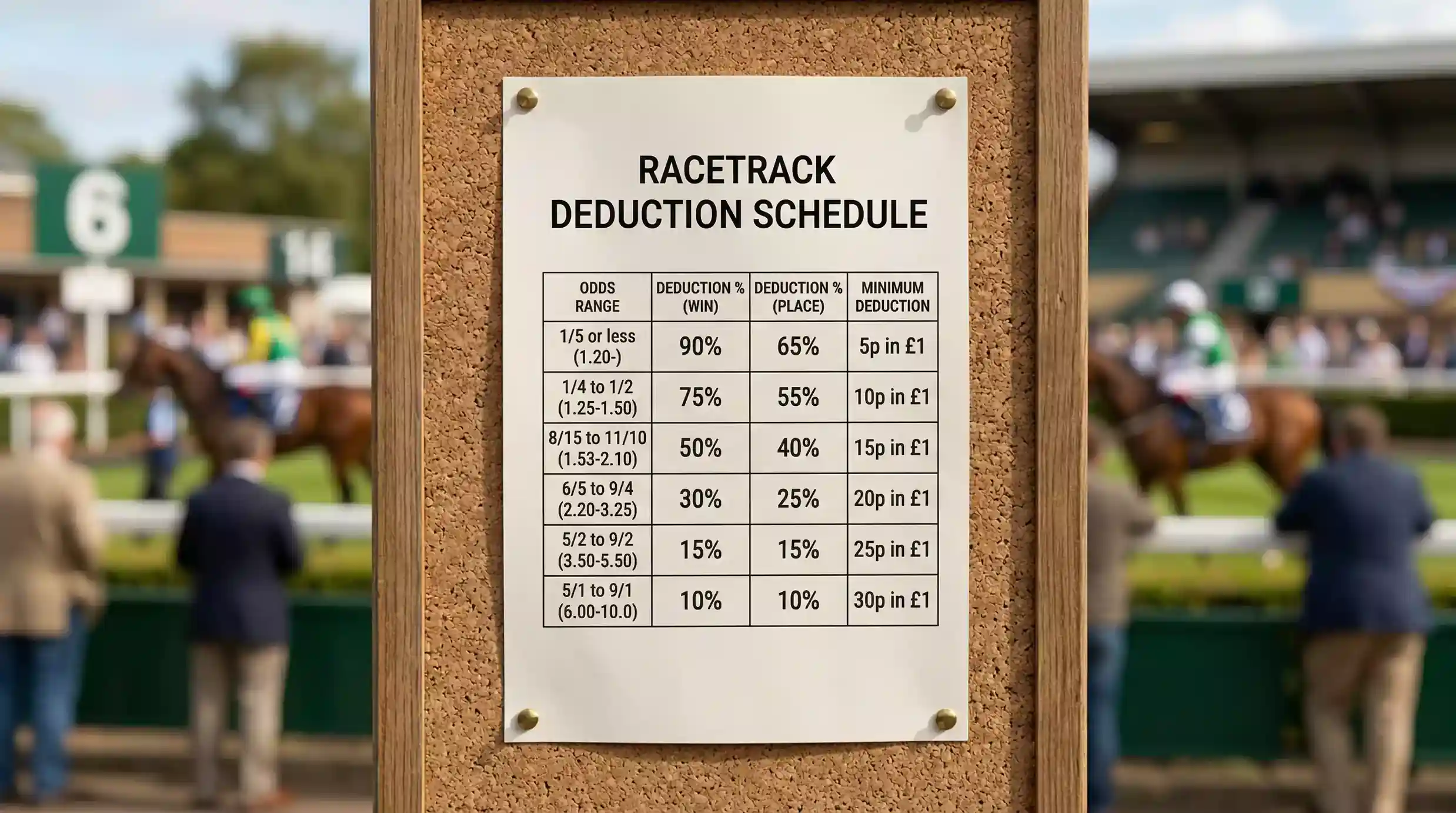
Below 8 runners the opposite problem emerges. Costs are low – a 6-runner trifecta wheel is just 20 combinations – but pools are thin and results tend to involve short-priced runners. When the first three home are all in the front of the market, the dividend often fails to cover even a modest wheel cost. Small-field racing is where the Tote’s 25% deduction bites hardest, because there is less total money in the pool to absorb it.
How to Spot 8-12 Runner Races on UK Cards
The BHA projects a 6-7% reduction in total races between 2024 and 2027, which means that identifying races in the value zone requires a bit more effort than simply scrolling through the card. Declared runners are published the day before racing, and I always check the overnight declarations to mark which races fall within my target range.
Handicaps are the most reliable source of 8-to-12 runner fields. The handicap system distributes weight to equalise chances, which attracts larger entries because more horses have a realistic shot. Class 3 and Class 4 handicaps on the Flat, and 0-140 and 0-135 chases over jumps, consistently produce fields in the value zone. Conditions races and Group events tend to attract smaller fields unless the prize money is particularly strong.
Time of year matters too. The Flat turf season from April to October delivers the strongest field sizes, with May through August producing the deepest cards. The all-weather calendar runs year-round but tends towards smaller fields outside the winter window when turf racing is unavailable. Jump racing peaks in December through March for competitive handicap fields, though the overall average is pulled down by small-field novice events.
I flag every race with 8 to 12 declared runners the evening before and build my session plan around those races. If a card has two races in the zone and three outside it, my exotic budget goes entirely to the two zone races. Discipline here is everything – playing outside the zone because a race looks interesting on form grounds is exactly the kind of decision that erodes your edge over time.
Premier Fixtures vs Core Meetings: Field Size Patterns
Richard Wayman at the BHA has described the strategy behind the fixture list: making the best racing better and using quality to grow interest. That policy has a direct statistical consequence. Premier Flat fixtures averaged 11.02 runners in 2025, up from 10.86 the previous year. Core meetings saw their average turnover per race fall by 14.4% in Q1 2025 compared to the same period a year earlier. Premier fixtures held steady.
For wheel bettors this creates a two-tier market. Premier meetings deliver the field sizes, pool depth and competitive quality that make exotic bets viable. Core meetings deliver smaller fields, thinner pools and weaker dividends. The cost of a wheel is lower at core meetings, but the return potential is lower too – often disproportionately so.
My split is roughly 70/30 in favour of Premier fixtures for exotic play. The remaining 30% goes to well-targeted core meeting handicaps where field sizes happen to hit the value zone and the race profile suggests a competitive contest. I never play exotics on small-field maiden or novice races at core meetings – the pools are too thin and the results too predictable to generate a worthwhile dividend.
There is a calendar effect worth noting. The early Flat turf season in April and May often produces transitional cards where field sizes are growing but pool participation has not yet caught up. I have found these weeks to be productive for wheel bets because the fields are competitive – trainers are eager to run fresh horses – but the pools have not attracted the volume that compresses dividends later in the summer. By Royal Ascot in June the pools are deep and the dividends more predictable. By October the fields are thinning as the turf season winds down, and the value zone narrows with them.
The value zone is not a guaranteed profit zone. It is the range where the structural economics of wheel betting – cost, coverage, pool size, dividend potential – align most favourably. Outside the zone, one or more of those factors works against you. Inside it, you have the best chance of building a ticket that generates positive long-term returns. For the full cost tables and formulas that underpin these calculations, the main wheel bet calculator guide covers every field size from 6 to 20 runners.
Why is 12 runners roughly the upper limit for cost-efficient full wheels?
At 12 runners a one-key trifecta wheel costs 110 combinations. At 14 runners it jumps to 156 – a 42% increase. The pool does not grow proportionally because the additional runners are typically less fancied and attract minimal stakes. The cost-to-expected-dividend ratio deteriorates beyond 12 runners, making part wheels or two-key structures more appropriate for larger fields.
Do handicap races produce larger fields more consistently?
Yes. The handicap system equalises chances through weight allocation, which encourages more entries because a wider range of horses has a realistic winning chance. Class 3 and Class 4 handicaps on the Flat and competitive handicap chases over jumps are the most reliable sources of 8-to-12 runner fields throughout the UK racing calendar.
Prepared by the Horse Racing Wheel bet Calculator editorial staff.